What Can You Do With an MSLP Outside of School Settings?
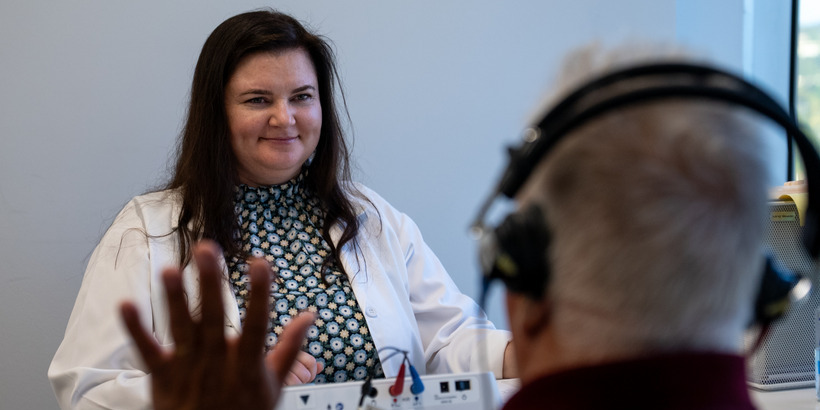
“While almost 50% of SLPs work in educational settings according to the ASHA, roughly 40% of SLPs work in medical settings, such as hospitals, skilled nursing facilities, outpatient clinics, rehabilitation centers, and home health. The remaining 10% work in private practice, government, industry, and colleges/universities.
These numbers mean there are many options for SLPs outside of school settings!
SLP salaries vary widely by state, setting, and experience; check out the Salary Report by the American Speech-Language-Hearing Association published every two years for up-to-date information.
SLPs in Hospitals: Acute Care, Inpatient Rehabilitation, Neonative Intensive Care Units, and Long-Term Acute Care Hospitals
Most hospital settings are fast-paced and rapidly changing; every day is different! SLPs in hospital settings need strong communication and collaboration skills, flexibility, independence, and a willingness to learn and ask questions.
Acute Care
SLPs may work in hospital settings, often serving multiple floors and units, such as the intensive care unit (ICU), post-operative units, stroke unit, and general medical floors. The goal of acute care is determining immediate safety and functional status.
Acute care SLPs frequently assess and treat swallowing disorders (dysphagia) and communication impairments resulting from conditions such as stroke, traumatic brain injury, neurodegenerative diseases, respiratory failure, critical illness, and head and neck cancer.
They may also evaluate cognitive-communication disorders, motor speech disorders, aphasia, voice disorders, and communication needs related to tracheostomy and mechanical ventilation. Acute care SLPs collaborate closely with physicians, nurses, respiratory therapists, dietitians, and rehabilitation professionals to support medical decision-making, patient safety, and discharge planning.
Inpatient Rehabilitation
Within hospital settings, SLPs may work both in acute care and inpatient rehabilitation facilities (IPR/IPF). Patients in IPR have generally progressed from ICU or stroke units, for example, and are medically stable enough to participate in intensive therapy (3 hours a day of physical, occupational, and speech therapy), but continue to experience significant communication, cognitive, swallowing, or speech impairments following illness or injury.
Inpatient rehabilitation SLPs provide comprehensive assessment and treatment of aphasia, cognitive-communication disorders, dysarthria, apraxia of speech, dysphagia, and executive functioning deficits. Treatment often focuses on improving functional communication, memory, attention, problem-solving, self-awareness, swallowing safety, and independence in daily activities.
Because patients typically receive multiple hours of therapy each day from an interdisciplinary team, SLPs collaborate closely with physical therapists, occupational therapists, physicians, nurses, psychologists, and case managers. Therapy emphasizes helping patients regain skills needed for returning home, managing medications, participating in work or school, maintaining relationships, and engaging in meaningful life activities.
NICU
Another possible hospital setting for SLPs is the Neonatal Intensive Care Unit (NICU), where SLPs collaborate with neonatologists, cardiologists, pulmonologists, dietitians, nurses, lactation consultants, and other therapists to support feeding and swallowing development in medically fragile infants.
Common populations include premature infants, infants with congenital anomalies, neurological conditions, respiratory disorders, and complex medical needs.
NICU SLPs assess feeding readiness, oral-motor development, suck-swallow-breathe coordination, and swallowing safety. They may provide bottle-feeding and breastfeeding support, recommend feeding strategies and equipment, educate caregivers, and help facilitate safe transitions from hospital to home. In many NICUs, SLPs also contribute to developmental care practices that support infant regulation, sensory development, and early communication.
Long-Term Acute Care Hospitals (LTACH)
Long-term acute care hospitals, or LTACHs, provide specialized care for critically ill patients needing extended medical support. SLPs may focus on supporting patients with tracheostomy and ventilator care, dysphagia management, cognitive rehabilitation, speaking valves, and functional communication.
Common diagnoses include stroke, traumatic brain injury, cancer, spinal cord injury, neuromuscular diseases like Amyotrophic Lateral Sclerosis, and encephalopathy.
Interdisciplinary collaboration is critical in LTACHs for best patient outcomes, and SLPs may collaborate with physical therapists, occupational therapists, respiratory therapists, pulmonologists, neurologists, oncologists, nurses, social workers, dietitians, and more.
SLPs in Rehabilitation Centers
SLPs may work in specialized day neuro or rehabilitation centers, where patients receive several hours of therapy each day across disciplines, including speech-language pathology, occupational therapy, and physical therapy. SLPs in rehabilitation centers may collaborate with neuropsychologists, mental health professionals, physical medicine and rehabilitation physicians, dietitians, and other professionals to support patients recovering from stroke, traumatic brain injury, brain tumors, and other acquired neurological disorders as they work toward greater independence and participation in daily life.
Outpatient clinics may be associated with or located within local hospitals, or they may be privately owned and operated by SLPs and other rehabilitation professionals, such as occupational and physical therapists. SLPs in outpatient clinics may specialize in swallowing disorders, voice disorders, aphasia, motor speech disorders, cognitive-communication disorders, and other communication impairments.
Sessions in outpatient and rehabilitation settings are generally longer, often lasting up to an hour, and may include group treatment. For example, several individuals experiencing aphasia or social communication difficulties following an acquired brain injury may practice these skills together in a group facilitated by an SLP.
These settings are often slower paced than hospital environments and require strong interpersonal skills to develop rapport with patients and families. Because recovery from acquired disorders can take months or even years, SLPs may have the opportunity to build long-term therapeutic relationships while supporting meaningful functional outcomes.
SLPs in Skilled Nursing Facilities
Patients in skilled nursing facilities (SNFs) may be receiving short-term rehabilitation services or may reside in the facility long-term. Patients on a rehabilitation unit often return to their prior living environment after receiving therapy following conditions such as stroke, traumatic brain injury, surgery, falls, or other medical events. Long-term residents frequently have neurodegenerative or neurological conditions such as dementia, Alzheimer's disease, Parkinson's disease, multiple sclerosis, or other disorders that affect communication, cognition, swallowing, or mobility. Some residents may be cognitively intact but require physical assistance with activities of daily living.
Occasionally, adults with congenital conditions such as cerebral palsy or Down syndrome reside in skilled nursing facilities and may receive speech-language pathology services.
SLPs in SNFs commonly assess and treat dysphagia, cognitive-communication disorders, voice disorders, and speech and language impairments. Treatment often focuses on maximizing safety, supporting functional communication, maintaining independence, improving quality of life, and helping individuals participate in meaningful daily activities for as long as possible.
SLPs in Early Intervention
Early Intervention (EI) or Early Childhood Intervention (ECI) services are supported by federal legislation that provides developmental services for infants and toddlers from birth to age three who have qualifying developmental delays or diagnosed conditions associated with developmental challenges. Common diagnoses include autism spectrum disorder, hearing loss, cerebral palsy, Down syndrome, spina bifida, fetal alcohol syndrome, genetic syndromes, and developmental delays. Eligibility criteria and service delivery models vary by state.
Most early intervention services are provided in a child's natural environment, such as the home, daycare, or community settings. SLPs assess and treat delays or disorders related to speech and language development, social communication, feeding and swallowing, play skills, and early cognitive-linguistic development. Family coaching is a central component of EI services, with SLPs working closely with caregivers to support communication development during everyday routines and activities.
Since SLPs are conducting sessions in client’s homes, collaboration with the caregivers is crucial to support the child’s development. One thing prospective students often find surprising is that EI is frequently more parent coaching than direct therapy. A large part of the SLP's role is helping caregivers build communication opportunities into feeding, play, book reading, dressing, bath time, and other daily routines.
SLPs in Private Practice
Many SLPs work in or own private practices that focus on pediatric populations. Pediatric private practice SLPs often see a broader range of diagnoses than school-based SLPs because services are driven by medical necessity, family goals, and insurance or other funding sources rather than educational impact.
Sessions are typically 30 minutes to an hour and may focus on speech sound production (articulation and phonology), language, augmentative and alternative communication (AAC), feeding and swallowing, social communication, and cognitive-linguistic skills. Private practices are often interdisciplinary and may include occupational and physical therapists who support sensory, fine motor, and gross motor development.
In private practice, SLPs may assess and treat children with autism spectrum disorder, Down syndrome, Fragile X syndrome, developmental language disorder, childhood apraxia of speech, feeding disorders, selective/restricted eating, fluency disorders, resonance disorders, and other communication and swallowing disorders.
Many children also receive speech-language services through their schools. Collaboration between private practice and school-based SLPs can help ensure consistency across settings and support the child's communication development and participation at home, school, and in the community.
SLPs in Home Health
SLPs may also provide services in patients' homes through home health agencies, hospitals, rehabilitation organizations, or contract companies. Home health SLPs travel to patients' residences within a designated geographic area and serve individuals who are homebound or have difficulty accessing outpatient services.
Common diagnoses include stroke, traumatic brain injury, Parkinson's disease, dementia, aphasia, dysarthria, dysphagia, and other neurological or medical conditions affecting communication, cognition, or swallowing. Home health SLPs assess and treat speech, language, cognitive-communication, voice, and swallowing disorders while helping patients improve functional skills within their everyday environments.
Because therapy occurs in the home, SLPs often incorporate real-world tasks such as medication management, meal preparation, use of communication supports, and caregiver training. Home health SLPs collaborate closely with family members, nurses, physical therapists, occupational therapists, physicians, and other healthcare professionals to support safety, independence, and quality of life.
One thing that distinguishes home health from outpatient or rehab settings is that the SLP gets to see the patient's actual living environment. This allows assessment and treatment of communication, cognition, and swallowing in the context where the patient functions every day.
SLPs in Government, Industry, and Non-Traditional Career Paths
Although many SLPs work in schools and healthcare settings, others pursue careers in government, industry, administration, advocacy, and related fields. SLPs employed by government agencies may work in public health, veterans' services, correctional facilities, state education departments, military healthcare systems, or early intervention programs. These roles may involve direct patient care, program administration, policy development, quality improvement, or leadership.
SLPs in industry often apply their expertise in communication, cognition, swallowing, and assistive technology outside of traditional clinical settings. Some work for companies that develop augmentative and alternative communication (AAC) devices, healthcare technologies, educational products, medical devices, and artificial intelligence tools designed to support communication and accessibility. Others serve as clinical educators, consultants, researchers, product specialists, administrators, or members of product development teams.
These careers demonstrate the versatility of an SLP degree and the many ways speech-language pathologists can improve communication, accessibility, and quality of life beyond direct clinical practice.
SLPs in Remote Roles
SLPs are increasingly seeking remote or hybrid work opportunities. While many medical settings require in-person assessment and hands-on care, a growing number of positions offer flexibility in location.
One example is teletherapy, which has grown substantially in recent years. SLPs may provide teletherapy services directly through school systems or may be employed by contract agencies that serve schools across multiple states. Outpatient clinics and private practices may also offer teletherapy for appropriate clients and services. Some SLPs work entirely through telepractice, while others combine in-person and virtual services.
Remote work is also common in non-clinical roles. SLPs may work remotely as university faculty, clinical educators, consultants, researchers, writers, administrators, or product specialists. Others work for companies that develop augmentative and alternative communication (AAC) devices, educational technologies, healthcare products, or artificial intelligence tools designed to support communication and accessibility.
Although not every area of speech-language pathology is conducive to remote work, advances in technology continue to expand opportunities for SLPs to provide services, education, and expertise from virtually anywhere.
The Field of Speech-Language Pathology is Vast
One of the best parts about the field of speech-language pathology is its incredible variety. SLPs may specialize in a particular setting, population, or disorder, or they may choose to remain generalists and work with a wide range of clients across the lifespan.
Many SLPs work full-time in one setting while also working part-time in a completely different setting. For example, an SLP might work in a school during the day and provide services in a private practice, hospital, or home health setting in the evenings. Others may transition between settings throughout their careers as their interests, goals, and lifestyles evolve.
Unlike many professions, a career change within speech-language pathology often does not require returning to school for an additional degree. The knowledge and skills developed as an SLP are highly transferable across settings and populations.
Whether your passion is helping a toddler say their first words, supporting a stroke survivor's return to independent living, assisting a patient with swallowing after a complex medical illness, or developing innovative communication technologies, there is likely a place for you within the profession. The field of speech-language pathology offers diverse opportunities to make a meaningful impact on the lives of others while building a career that can grow and change alongside you.