CTE and Its Impact on Sports and Speech: An Interview with SuperMotocross Star Justin Brayton
“Do you think I have CTE?”
It was a simple question, and at the same time, one I couldn’t answer.
Before COVID-19, along with working as a speech-language pathologist (SLP), I also worked in the sports world for a sports-marketing company. Around that time frame, the movie Concussion, which was based on the true story of Dr. Bennet Omalu, a forensic neuropathologist who found Chronic Traumatic Encephalopathy (CTE) in NFL players, was released. Concussion, along with the sensational arrest, trial, and death of former New England Patriot Aaron Hernandez, brought the conversation around CTE to the masses.
While working a sporting event, I was approached by a person with whom I had worked for years but didn’t know well on a personal level. When he timidly asked, “You’re a speech-language pathologist, right? Can I talk to you for a minute?” I (incorrectly) assumed it was about the event of the day.
He pulled me to a quiet area and began with, “You know I played collegiate football, right?” He named his perennially top-ranked collegiate football program and hall-of-fame former football coach, and he talked about how his football career ended. I listened intently as he explained he had recently watched Concussion and was worried about his own symptoms. At first, the issues he described could have been attributed to normal aging, fatigue, and work stress. However, it was the factor I didn’t know that ultimately worried me: He had a history of concussions. His adding that detail to our conversation prompted me to immediately say, “Call your medical doctor.”
In the years since, several athletes have spoken privately to me about CTE, and almost all of them have asked some version of, “Do you think what I’m describing to you sounds like CTE?” My answer has remained the same: “I think you should speak with your doctor.”
The Sports and CTE Connection with Speech-Language Pathology
What does speech-therapy have to do with sports and CTE? Well, there are more connections than you would think.
In a 2017 study published in the journal Brain and Language, researchers at Arizona State University looked at linguistic changes of professional football players over time using video tapes and interviews of both players and coaches. Those researchers found a steeper decline in vocabulary size and other verbal skills in 10 players who spoke at news conferences over an eight-year period, compared with 18 coaches and executives who had never played professional football and who also spoke in news conferences during the same period.
In the two decades that have followed Dr. Omalu’s research, a wealth of knowledge has been gained about CTE, its impact, and symptoms. We now know the earlier version of CTE, which was once believed to only affect boxers (dementia pugilistica), can affect anyone who has experienced excessive, repeated blows to the head.
What hasn’t changed is the confirmation of CTE diagnosis. CTE can only be definitively diagnosed upon autopsy. This raises other important questions, and the NFL is not the only sport in which athletes experience repeated blows to the head. Soccer, snowboarding, supercross, ice hockey, and rugby all pose a higher risk of head trauma.
As we continue to learn more about CTE, what are the sports organizations doing to protect their athletes? More importantly, what if language changes, as evidenced by the results of the Arizona State study, are the key to earlier diagnosis? Well, that’s where SLPs may come into play.
Pepperdine University’s New Master’s Program and CTE Integration
Pepperdine University recently launched its master of science program in speech-language pathology and is preparing the next generation of SLPs to be elite practitioners across all settings. As we learn more about CTE, and its impact on language and memory, many of our graduate students are highly interested in this disorder. During discussions of CTE, many of them have wisely asked, “What are we doing to help these athletes?”
Me’Chele Sevanesian, a graduate student in Pepperdine’s School of Speech-Language Pathology with a keen interest in CTE, is excited to enter this niche of the speech-language pathology field upon graduation. “Many people are not aware that during the development of IMPACTest, speech-language pathologists worked alongside medical professionals to collect data on active roster athletes. SLPs have the knowledge and competency to support active roster athletes through concussion protocols, the same way we support others in schools and in hospitals,” says Sevanesian.
Top Supercross Champion Justin Brayton Shares His Story
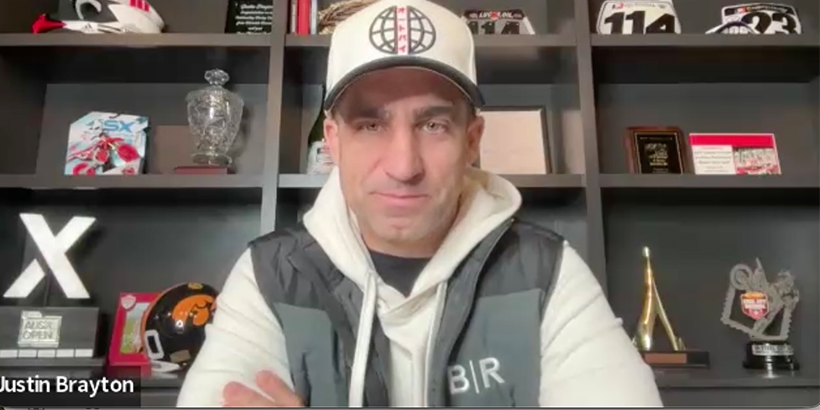
Justin Brayton is an American supercross star who built a career that solidified him as a top champion in the SuperMotocross (SMX) World Championship league. In 2009, Justin signed with super-bowl-winning coach Joe Gibbs’s racing team and continued to excel. Now retired and working in broadcasting, Justin was instrumental in developing concussion protocols for his sport. Justin very graciously agreed to be interviewed regarding his personal experience with multiple concussions, his view of CTE’s impact on sports, and his thoughts around what we could all do better.
“I’ve had a handful of concussions, legit-concussions throughout my years. I’ve been knocked out twice, and it’s different every time. The worst ones I’ve had are the ones where I didn’t get knocked out, which is really, really interesting. In 2016, I had a big crash up in Washington, and I hit my head super hard. I didn’t get knocked out, but it took me, oh, I would say four or five months to feel somewhat normal again.”
Along with waking up and not feeling “normal,” Justin noticed his inability to exercise as intently was decreased. He experienced brain fog and just not feeling like himself.
Post-COVID, we’ve heard lots of people across the board speak about brain fog. What did it feel like for Justin? “Irritability: I just didn’t feel like I had the mental capacity to talk to multiple people, to process everything that you do on a day-to-day basis.”
A few years later, he experienced another concussion and was completely knocked unconscious while on the track. When he gained consciousness, he felt normal. “It was very, very strange. The next day, I felt like I could race again, where I didn’t feel like that in my previous concussions. I don’t know the explanation.”
In his experience with multiple concussions, Justin noticed a pattern: The hits to the head where he fully lost consciousness somehow offered an easier recovery. “The other ones where I hit my head hard but wasn’t knocked out—everything was fuzzy. It was like I had one-hundred different tabs open on my internal computer. Everything was just slow for the longest time.”
For our students in the speech-language pathology graduate program, this internal perspective of what it feels like to have and to recover from a head-injury is extremely important. It helps guide our thinking into both what we’re trying to diagnose (e.g., Is this a concussion or something else?) along with how to treat.
As Justin added, “Concussions are hard, right? You can’t see them. And, it’s so difficult because in any professional sport, if you’re not on the field or not on the track, you’re not performing for your team or your sponsors, and in our sport, it’s heavily driven by sponsorship.”
He’s correct: In many ways, sponsorships greatly influence the sporting world. NASCAR, NFL, NBA, and others all bring in hundreds of millions in sponsorships annually. Collectively, NFL teams brought in $2.4 billion in recent years.
As the awareness around CTE has grown, along with sports teams’ growing knowledge around the risk between repeated head-hits and the intersection of CTE, concussion protocols have been implemented. Justin was instrumental in helping develop the protocols for future supercross racers.
“Our sport in particular, SMX, is learning so much, as I’m sure other sports are, but we have a very, very strict concussion protocol now. I want to say it’s like a six-or-seven step process to even be able to get back on the motorcycle now. We’ve got a great leadership team that has all these things in place, but once again, if you can’t see it, it’s so difficult. Concussions just aren’t as easy as a simple torn ACL or broken bone. It’s a difficult situation, but we’re learning.”
And how does a professional athlete like Justin Brayton feel professional sports are doing addressing this issue? “I think more athletes are taking it more seriously. Speaking for myself, I didn’t take concussions seriously 20 years ago. I thought I had a headache, and I knew that I had to get back on the motorcycle because that was my career and my livelihood. Thankfully, there are so many smart folks out there now educating all of us.”
A Sports and Broadcasting Legend Offers Advice for Future SLPs
For our Pepperdine graduate students and future SLPs, Justin offered the following advice: “Challenging the brain is smart—just like in a knee injury. See if they (the athlete-patient) get irritable, see what their day-to-day life is looking like, and then slowly take the steps of challenging them mentally and physically every day. Then? Make sure that patient is honest. That’s so difficult because I wasn’t even honest. When I got my first concussion, I just thought it was a normal headache and ignored it. Now? Err on the side of caution and push that patient to be honest with you.”
When asked about his own concerns regarding his repeated concussions, Justin thoughtfully added this, “I’m 41 now. Our brains are so clogged these days. You wonder, ‘Have I been on my phone too much? Am I trying to remember too much? I have three kids. Is it normal aging or injury related? I don’t know. Is this just getting older or is it a choice that my brain’s making?’ In broadcasting, there’s a lot of memorization, right? If I didn’t do that type of stuff, and I just let my brain kind of relax, I don’t think that’s a great choice. I need to continue to challenge myself—which is healthy.”
Preparing the Next Wave of SLP Professionals to Play a Pivotal Role
While CTE is traditionally believed to arise from repeated head hits, even one concussion can cause issues. Concussions are very common, with 1–3 million U.S. emergency room visits annually. In the speech world, concussions may result in slow or slurred speech, trouble finding words (anomia), confusion, and trouble following conversations. Mental fatigue, brain fog, and general irritability are also commonly reported and may trigger a visit to a speech-language pathologist.
As Pepperdine University prepares the next wave of SLPs, our students are not only learning how to be SLPs, but how to think through our ever-evolving understanding of the brain, its workings, and the patient experience during recovery. Concussions, CTE, language and memory changes are the core of what we do, and our next-gen SLPs will play a fundamental role in examining and treating all patients with any concerning speech, language, and memory changes.
Like the Arizona State study found, language changes may be the earliest indicator of CTE, and an earlier, faster, better diagnosis could help countless others—not just with regard to CTE, but all illnesses of the brain. That’s what we are preparing our students at Pepperdine for: To be at the forefront of identifying, diagnosing, and treating all disorders of speech and language. More importantly, we are teaching them to advocate for all people, including athletes, who need our help in the speech-language disorder world.
*A special thanks to Mr. Justin Brayton for being so honest and forthcoming with his personal experience and agreeing to be interviewed for Pepperdine University.
Katie Conn Suggs is the Assistant Clinical Professor of Speech-Language Pathology at Pepperdine University and has authored multiple articles on CTE, published by the American Speech-Language-Hearing Association (ASHA).