How To Become A Speech Pathologist: Complete SLP Career Guide
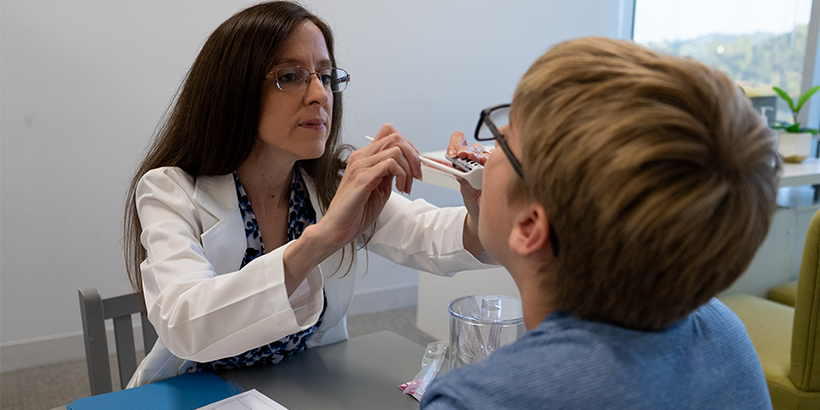
Steps to Become a Speech Pathologist
What degree do you need?
To become a speech-language pathologist, you need a master's degree in speech-language pathology from an accredited graduate program (this includes programs that are candidates for accreditation!). Most master programs require 50-60 credit hours in speech-language pathology courses.
How long does it take? (Clinical Practice Hours)
Full-time master programs in speech-language pathology typically take 5 semesters to complete, while part-time programs may be completed in 8 semesters. 400 clock hours of direct clinical contact are required for graduation; 25 of these hours may be in observation, and a portion of these hours may be completed through telepractice or simulated clinical cases. Most of these clockhours are fulfilled through clinical placements for students in the area in which they live. Students rotate through placement such as schools, private practices, skilled nursing facilities, home health, hospitals, and rehabilitation centers to give them exposure to a variety of settings.
How Much Do Speech Pathologists Make?
According to the U.S. Bureau of Labor Statistics, the median annual wage for SLPs was $95, 410 per year, or $45.87 per hour, although wages vary depending on geographic location, clinical setting, and experience.
SLPs in schools typically make less than SLPs in healthcare settings. The need for SLPs is expected to grow 15% by 2034, which is much higher than average when compared to all occupations.
Discover what you can do with a Master of Science in Speech-Language Pathology.
How do you get licensed or certified? Pass the Praxis Exam?
Certification may be applied for after a graduate of an SLP master's program completes the clinical fellowship, or CF. The CF is typically completed within 9 months of full-time employment in a clinical setting, although some individuals may need longer to fulfill the 1260 clinical hours requirement.
Students must also pass the Praxis Exam in Speech-Language Pathology before applying for certification through ASHA. Graduate programs prepare students to pass the Praxis and demonstrate clinical competence in all areas of our scope of practice.
Certification in speech-language pathology is offered through the American Speech-Language Hearing Association (ASHA), and certified speech-language pathologists hold the Certificate of Clinical Competence in Speech-Language Pathology (CCC-SLP). Certification is renewed every 3 years.
Requirements for state licensure in speech-language pathology differ from state to state, but typically involves yearly renewal through continuing education and a fee. Some states require SLPs to hold teacher's certification. Check your state licensing board for specific requirements!
What's the difference between SLPs and speech assistants?
Speech-language pathologists have completed a master's program in speech-language pathology, passed the Praxis exam, completed a clinical fellowship, and hold the Certificate of Clinical Competence. SLPs are able to assess and treat a variety of speech, language, cognitive, and swallowing disorders independently, with no additional supervision required. SLPs can evaluate and provide diagnoses, write treatment plans and treatment goals, and supervise others, including graduate students, CFs, and SLPAs.
Speech-language pathology assistants (SLPAs) hold a bachelor's degree in communication sciences and disorders, or an associate degree in an SLPA program. They may have completed an ASHA assistant certification program, although this is not required at this time. As support personnel, SLPAs must be supervised by a licensed and certified SLP, and cannot evaluate or diagnose speech, language, cognitive, or swallowing disorders.
SLPAs can implement treatment plans and conduct intervention sessions, but they can't write or modify goals. In most states, SLPAs are also not able to work with clients with feeding or swallowing disorders, diagnoses seen in many medical settings. Therefore, SLPAs primarily work under the supervision of an SLP in school or clinic settings. SLPAs cannot supervise others, and their documentation must be reviewed and signed off by an SLP.
Ready to Start Your Journey Toward a Rewarding Career in Speech-Language Pathology?
Earn your online Master of Science in Speech-Language Pathology at Pepperdine. The SLP is a hybrid program designed to develop skilled, compassionate speech-language pathologists who are experts in the field, and are committed to serving and leading in their local communities.
Get in Touch
Fill out the Request Information form to learn about the opportunities that await you.
Start Your Application
Begin your application to Pepperdine today through the Common Application.